Sun Safety for Babies and Kids: Tips to Protect Your Child from UV Rays

Stick to the shade and use protective clothing and accessories especially for babies under 6 months, who should avoid sunscreen when possible.
Use broad-spectrum mineral SPF 30+ for children 6 months and older, apply 15–30 minutes before going out, and reapply every 2 hours.
Stay hydrated, check the UV index, and know the signs of sunburn and heat illness to keep kids safe in the sun.
Protecting your child from the sun's harmful UV rays is one of the most important steps you can take for their long-term skin health. Even just 15 minutes in the sun can damage unprotected skin, according to the CDC. But we’re here to help keep your little one safe so you can still have plenty of fun outdoors!
Whether you're heading to the beach, the backyard, or the park, knowing the basics of sun safety for babies and kids can keep the fun going all summer long!
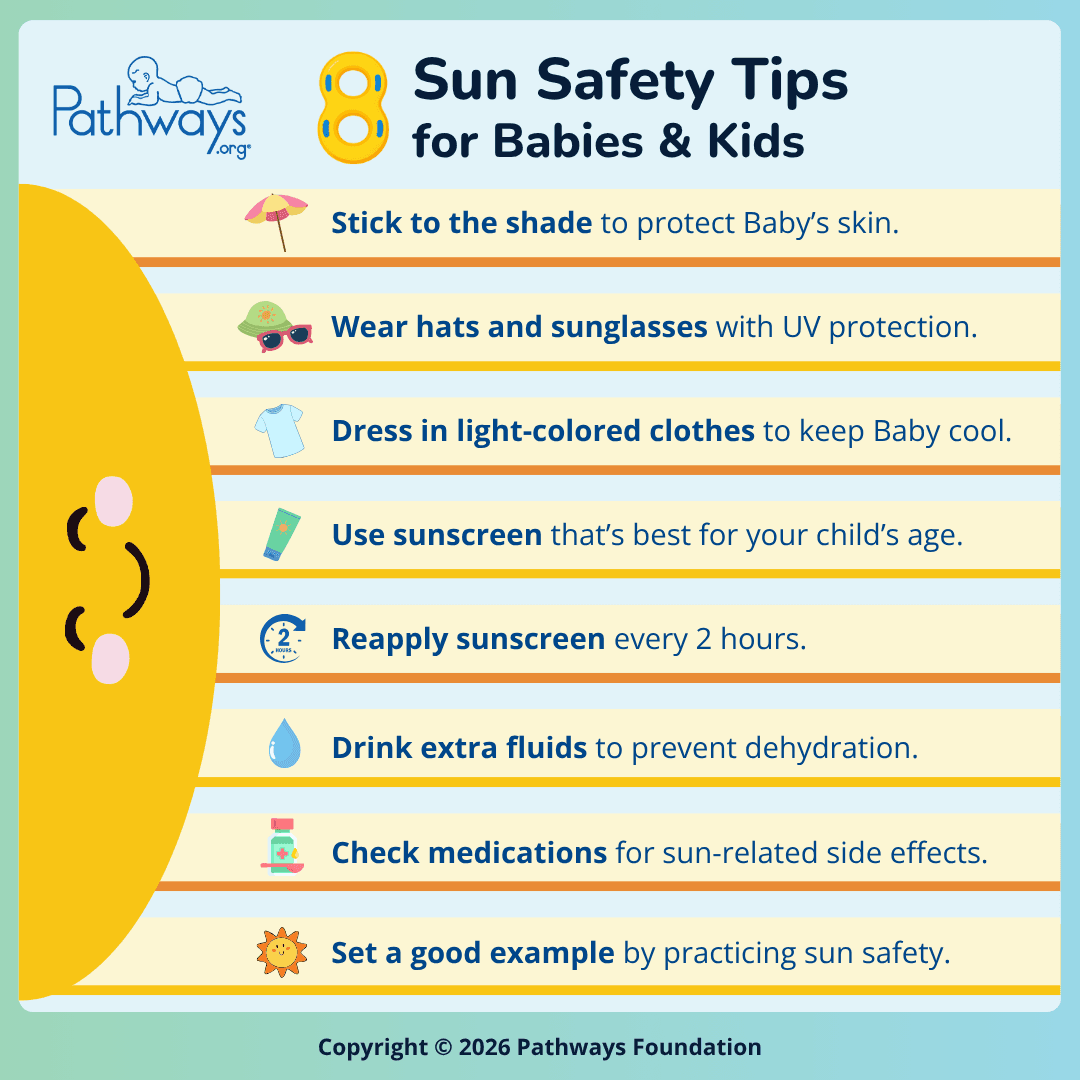
Sun Safety Tips for Babies and Kids
Stick to the Shade
Babies have very delicate skin, so try to keep them in the shade or under an umbrella. Keep in mind shade alone doesn't offer full protection. Sunscreen should still be worn if Baby is over 6 months. UV rays are strongest from 10 am to 4 pm, so try to limit sun exposure during these peak hours when possible. Check your local UV index (available in most weather apps) and take extra precautions on days when it reaches 6 or above.
Wear Sunglasses and Hats
Besides looking especially cool (and adorable) in sunglasses, your little one will keep their eyes protected from UV rays. Find a pair of kids’ sunglasses with at least 99% UV protection. Baby sun hats are great for protecting their face, eyes, and head. Some kids may resist wearing them, so try introducing hats as early as possible. Hats don’t offer perfect protection from the sun, so make sure to apply sunscreen as normal.
-NnjWAF.png&w=3840&q=75)
Dress in Light-Colored Clothing
Put your child in light-colored, tightly woven clothing to help reflect sunlight. If Baby is too young to wear sunscreen, make sure their clothes cover their arms and legs. If you’re heading to the beach or pool, consider having your child wear a rash guard or swim shirt for added coverage.
Choose the Best Sunscreen for Your Child’s Age
Sunscreen choice matters, especially for young children. Here's what current guidelines from the American Academy (AAP) of Pediatrics and the American Academy of Dermatology (AAD) recommend:
Age-by-Age Sunscreen Guidance
Under 6 months: Sunscreen is generally not recommended. Stick to shade, hats, and protective clothing. If shade isn't available, a small amount of mineral sunscreen on exposed areas is okay. Check with Baby’s healthcare provider before using sunscreen on them and do a small patch test on their inner wrist to check for skin sensitivity or allergy.
6 months and older: Use a broad-spectrum sunscreen with SPF 30 or higher. For fair-skinned children or extended outdoor time, SPF 50+ is a good choice.
Mineral vs. chemical sunscreen: The AAP and AAD recommend mineral sunscreens containing zinc oxide or titanium dioxide as the first choice for babies and young children. They sit on top of the skin rather than being absorbed and avoid ingredients like oxybenzone that the FDA has flagged for further safety review.
Spray sunscreens: Avoid using spray sunscreens on children's faces due to inhalation risk and uneven coverage. Lotion is the safer, more reliable option for kids.
Always double-check labels before using products like sunscreen on children, and throw out any expired bottles.
Reapply Sunscreen Frequently
Apply sunscreen 15-30 minutes before going outdoors and reapply at least every 2 hours throughout the day. During water activities, reapply every 40-80 minutes, waiting at least 15 minutes to let it absorb before going back in the water. No sunscreen is truly waterproof, even if it’s labeled water-resistant. Always reapply after sweating and towel drying.
Drink Extra Fluids
Heat and sun exposure can increase fluid loss, so it’s important to keep your child hydrated throughout the day. For babies under 6 months, breast milk or formula provides all the hydration they need (water is not recommended at this age). Babies 6 months and older can begin having small amounts of water alongside breast milk or formula. Older children should drink water regularly before, during, and after time spent outdoors, and shouldn't wait until they feel thirsty to drink up.
Check Your Child’s Medications
Some medications increase skin sensitivity to the sun. Ask Baby’s healthcare provider whether any medications your child takes may affect how their skin responds to UV exposure. Follow their advice for sun safety and make other caregivers aware of it, too.
Lead By Example
Set a good example for your children by wearing sunscreen, sunglasses, and a hat yourself. As your children grow older, explain why sun protection matters. Understanding the “why” helps build lifelong habits.
--Rkz2p.png&w=3840&q=75)
What to Do If Your Child Gets Sunburned
Even with the best precautions, sunburns can happen. If your child's skin turns red, feels warm, or they seem uncomfortable after sun exposure (for babies, this can look like fussiness or excessive crying) move them indoors, apply a cool (not cold) compress, and offer extra fluids (formula or breast milk for babies). Seek medical attention if you notice blistering, fever, chills, or signs of dehydration.
Signs of heat exhaustion, such as heavy sweating, weakness, cool or pale skin, nausea, or fainting, also require prompt attention. Move your child to a cool environment and contact your healthcare provider if symptoms don't improve quickly.
A Note on Vitamin D
Many parents ask whether sun protection will interfere with their child's vitamin D levels. Current guidance from the AAP recommends meeting vitamin D needs through diet and supplements rather than intentional UV exposure, which carries risks that outweigh the benefits. Talk to your child’s healthcare provider about the right vitamin D supplement for their age.
Sources
“All Sunscreens Are Not Created Equal.” Allergy & Asthma Network, 18 June 2015, allergyasthmanetwork.org/news/all-sunscreens-are-not-created-equal/. Accessed 11 May 2026.
Gupta, Deepti, and Matthew Mahoney. “Baby Sunburn Prevention Tips.” HealthyChildren.org, American Academy of Pediatrics, 13 Apr. 2026, www.healthychildren.org/English/ages-stages/baby/bathing-skin-care/Pages/Baby-Sunburn-Prevention.aspx. Accessed 11 May 2026.
“How to Apply Sunscreen.” American Academy of Dermatology Association, 15 Aug. 2025, www.aad.org/public/everyday-care/sun-protection/shade-clothing-sunscreen/how-to-apply-sunscreen. Accessed 11 May 2026.
Porto, Anthony, and Sarah Abu-Alreesh. “Vitamin D for Babies, Children & Adolescents.” HealthyChildren.org, American Academy of Pediatrics, 24 Aug. 2022, www.healthychildren.org/English/healthy-living/nutrition/Pages/Vitamin-D-On-the-Double.aspx. Accessed 11 May 2026.
“Should You Put Sunscreen on Infants? Not Usually.” U.S. Food and Drug Administration, 9 May 2024, www.fda.gov/consumers/consumer-updates/should-you-put-sunscreen-infants-not-usually. Accessed 11 May 2026.
“Sun Safety Facts.” Centers for Disease Control and Prevention, 10 Feb. 2026, www.cdc.gov/skin-cancer/sun-safety/index.html. Accessed 11 May 2026.
“Sun Safety: Information for Parents about Sunburn & Sunscreen.” HealthyChildren.org, American Academy of Pediatrics, 9 Aug. 2024, www.healthychildren.org/English/safety-prevention/at-play/Pages/Sun-Safety.aspx. Accessed 11 May 2026.