Fun Summer Learning Activities for Babies, Toddlers, and Kids
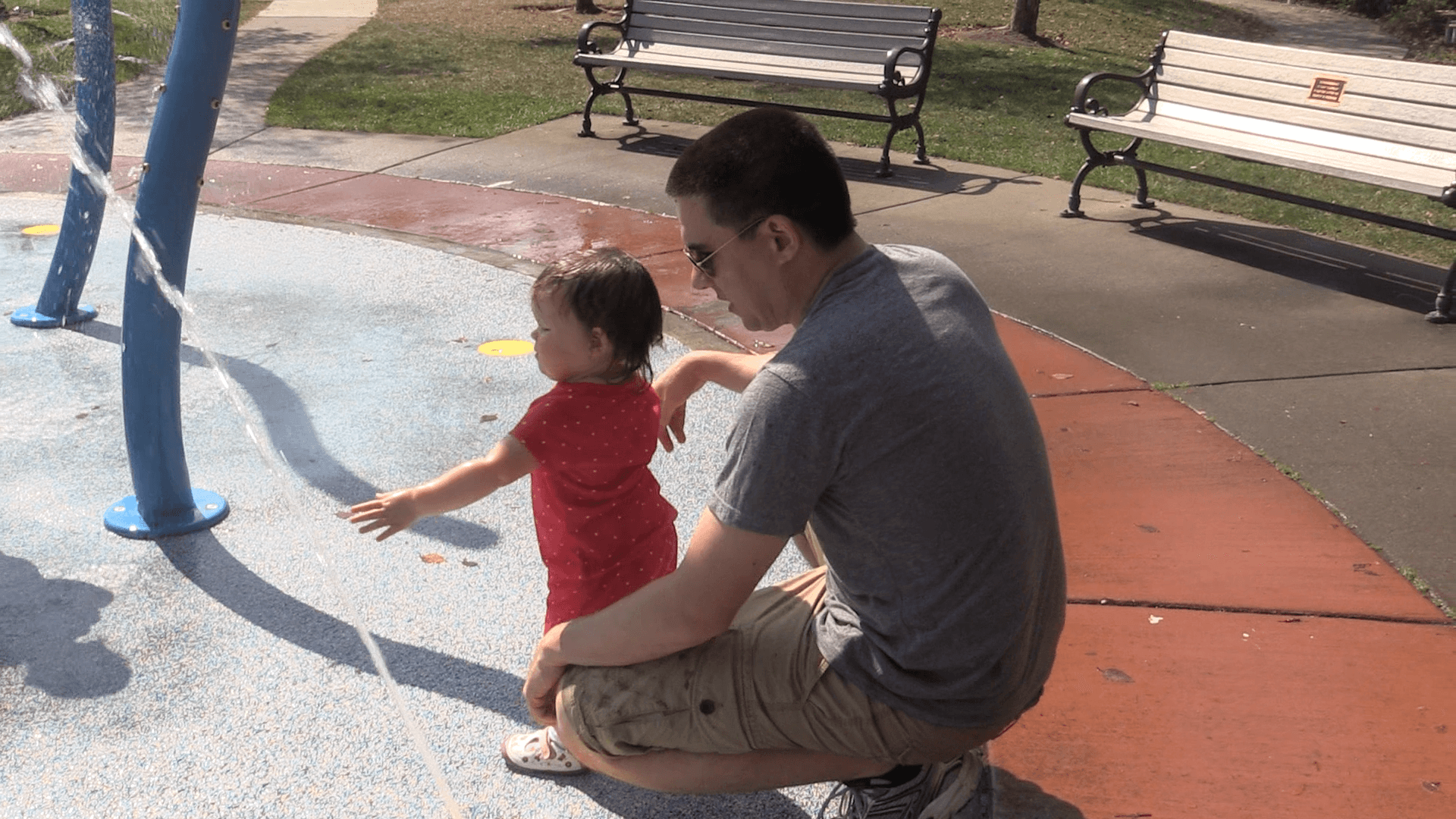
Screen-free summer fun looks different at every age, and it doesn't have to be complicated or expensive.
Play and exploration naturally build the skills kids need without feeling like learning.
Don't forget to leave room for boredom! Unstructured time is where creativity and independence grow.
Summer is a wonderful time to slow down and spend time with your family, but as the weeks go by, it can start to feel like your house is turning into a full-time summer camp and you’re running out of activities on your itinerary.
Finding ways to keep children engaged all day without defaulting to screens is harder than it sounds. These summer learning activities for babies, toddlers, and school-aged kids are designed to make it a little easier.
Summer Learning Activities for Babies (0–12 Months)
Babies learn so much through their senses, so some of the best summer activities for infants are simple, hands-on activities that engage their senses in different ways.
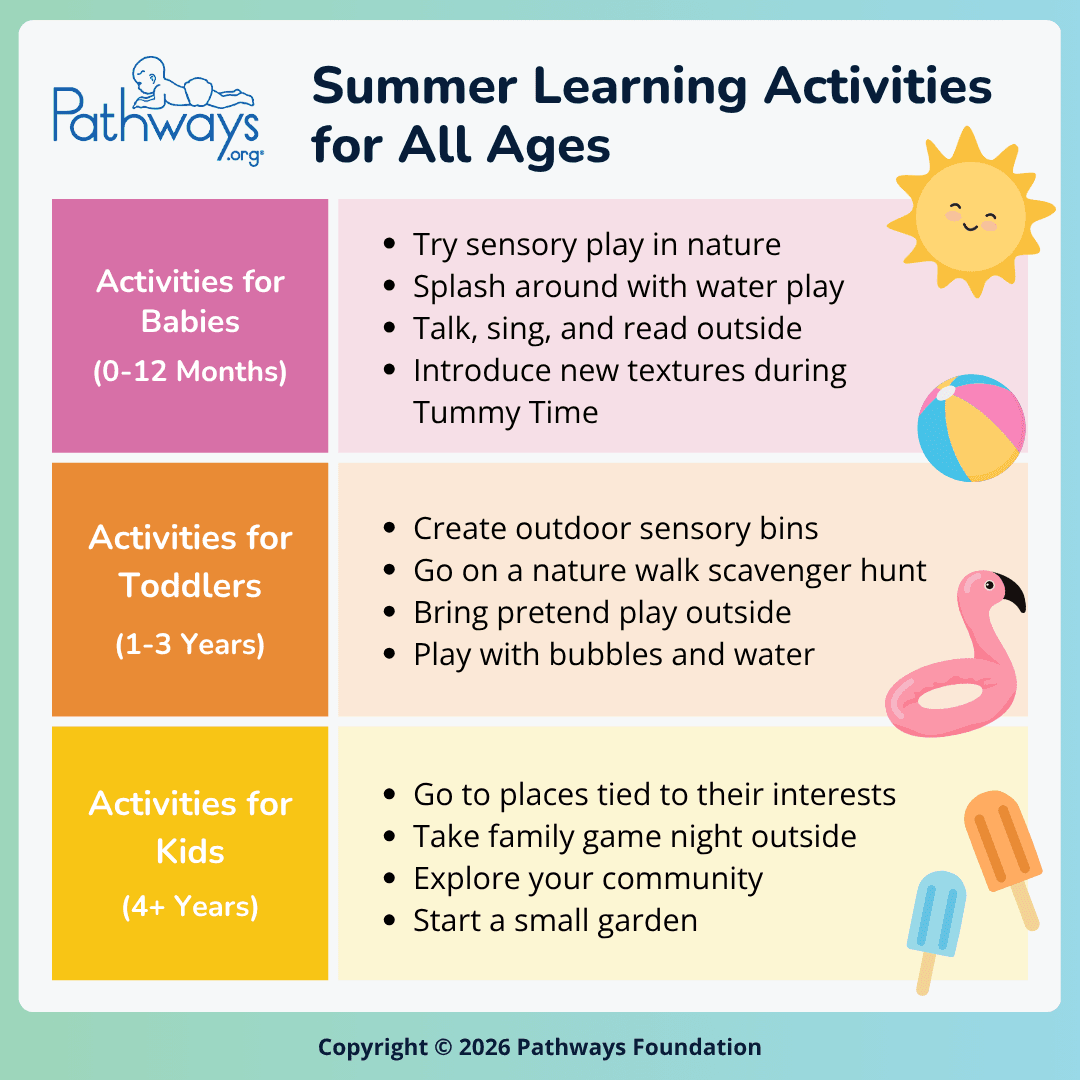
Try sensory play in nature: Lay a blanket outside and let Baby feel grass, listen to birds, and track bugs or animals with their eyes. This supports sensory development and early visual tracking skills.
Splash around with water play: A shallow bin of water on a warm day is endlessly fascinating for babies. Gently splash their feet and hands, narrating what they feel. This builds sensory awareness and early cause-and-effect thinking. Remember: never leave Baby’s side when playing with water.
Talk, sing, and read outside: Take story time to the porch or backyard. Reading aloud and singing to babies lays the foundation for language and communication skills.
Introduce new textures during Tummy Time: Place Baby on different surfaces, like a soft towel on sand or cool grass. This helps Baby build core strength for major milestones and exposes them to different textures they’ll experience once they start crawling.
Get outdoors and play this simple sensory activity with Baby!
Summer Learning Activities for Toddlers (1–3 Years)
Toddlers are natural explorers. The best summer activities for toddlers tap into that curiosity with outdoor exploration and unstructured play.
Create outdoor sensory bins: Fill a bin with sand, water, dry rice, or dried beans and add scoops and cups. Or start a mud kitchen! Toddler sensory play supports fine motor skills, focus, and early math concepts like full/empty and more/less.
Go on a nature walk scavenger hunt: Head outside and look for specific things: something red, something soft, something that makes noise. This builds observation skills, vocabulary, and attention.
Bring pretend play outside: Pretend play builds real-world skills and lets your child’s imagination soar! Enjoy the sunshine while you play with outdoor pretend play scenarios, such as a make-believe construction site or a backyard carnival,
Play with bubbles and water: Chasing and popping bubbles builds eye-hand coordination and balance. Pouring water between containers is an early lesson in measurement and volume.
Playing with ice is a fun way to beat the heat! Try this cool ice game for toddlers:
Summer Learning Activities for Kids (4+ Years)
School-age kids are ready for more independence, but they still need fresh ideas and a nudge to step away from screens. These activities keep them engaged, challenged, and learning without it feeling like school.
Go to places tied to their interests: Do they love cars? Take them to a monster truck rally or auto show. If their hobbies include reading or music, check out books from the library or go to a free outdoor concert. Encourage them to keep a journal or write stories about what they did to exercise their communication skills.
Take family game night outside: Try group sports like kickball, frisbee golf, or volleyball. If your kids don’t mind the dark, play flashlight tag or hide-and-seek after the sun sets! These activities encourage gross motor movement and strategic thinking.
Explore your community: Visit local parks, nature preserves, historical sites, or museums. Many offer free admission on certain days. Talking through what you see helps build knowledge and curiosity, and a short reflection afterward ("What was your favorite part?") makes the learning stick.
Start a small garden: Let your child plant seeds, water plants, and watch things grow. Gardening introduces science concepts and gives children a sense of responsibility. They’ll feel so proud knowing they grew their own fruits and veggies. Plus, it's a great reason to get outside every day!
It’s Okay to Let Your Kid Be Bored!
Don’t worry about always having the next activity ready to entertain your child. Unstructured free play is where creativity really kicks in. When kids direct their own time, they solve problems, invent games, and build independence in ways scheduled activities can't replicate.
Boredom also helps kids learn to manage their emotions when situations don’t go their way (a skill they’ll use a lot as adults!). So take the stress off and leave space in your schedule for your child to fill on their own. They’ll thank you later for it!
Sources
Miller, Gia. “The Benefits of Boredom.” Child Mind Institute, 30 Oct. 2023, childmind.org/article/the-benefits-of-boredom/. Accessed 11 May 2026.
“What Is Sensory Play? The Benefits for Your Child and Sensory Play Ideas.” Cleveland Clinic, 18 Mar. 2022, health.clevelandclinic.org/benefits-of-sensory-play-ideas. Accessed 8 May 2026.