Feeding: What to Expect from Infancy to Toddlerhood

No matter what feeding approach you choose, what matters most is that Baby is getting the essential nutrients for their development. Feeding also helps them develop the muscles used to chew, swallow, and talk.
Baby will go through many stages of feeding development, and all of them are important to their growth! These stages are connected to motor milestones like holding up their head, sitting with support, and developing a pincer grasp all play a role in expanding what and how Baby can eat.
⚑ How Feeding Develops
Open your child's age range to see what feeding looks like at each stage:
Baby's first 6 months
0–2 Months: Figuring Out Feeding
Feeds 8–12 times every 24 hours
Drinks 2–4 oz. of breast milk/formula per feeding
Look for deep, rhythmic sucking. Light or fluttery sucking may be worth mentioning to Baby's healthcare provider
2–4 Months: Gaining a Bigger Appetite
Feeds 6–8 times every 24 hours
Drinks 4–6 oz. of breast milk/formula per feeding
Opens their mouth for breast or bottle when hungry
Baby may want to feed more frequently during growth spurts. This is called cluster feeding!
4–6 Months: Getting Ready for Solids
Most babies are ready for solid foods around 6 months
Signs Baby may be ready: good head control, can sit with support, shows interest in what you're eating
Always check with your healthcare provider before starting solids
Continue breast milk/formula alongside solids until at least 12 months
6 to 12 months
6–9 Months: Hello, Finger Foods!
Starts exploring food with their hands. Touching and squishing are part of learning, so let Baby play with their food!
Begins picking up small pieces using thumbs and fingers
Eats 750–900 calories per day, including 24 oz. of breast milk/formula
Great starter finger foods: scrambled eggs, small banana pieces, shredded cheese, soft cooked veggies
Introduce a straw cup to help Baby develop a good swallow pattern
9–12 Months: More Foods, More Independence
Uses a pincer grasp to pick up a wider variety of soft table foods
May start trying a spoon or fork and drinking from an open cup with your help (expect spills!)
Eats around 1,000 calories per day, including 24 oz. of breast milk/formula
12+ months
12+ Months: Joining the Family Table
Finger feeds themselves, eating from a growing variety of foods
Limit breast milk or formula to about 16 oz per day to avoid crowding out important nutrients from food
Can use a spoon or fork with more accuracy
Holds and drinks from an open cup all by themselves
Go Deeper on Each Stage
Understanding Feeding Cues
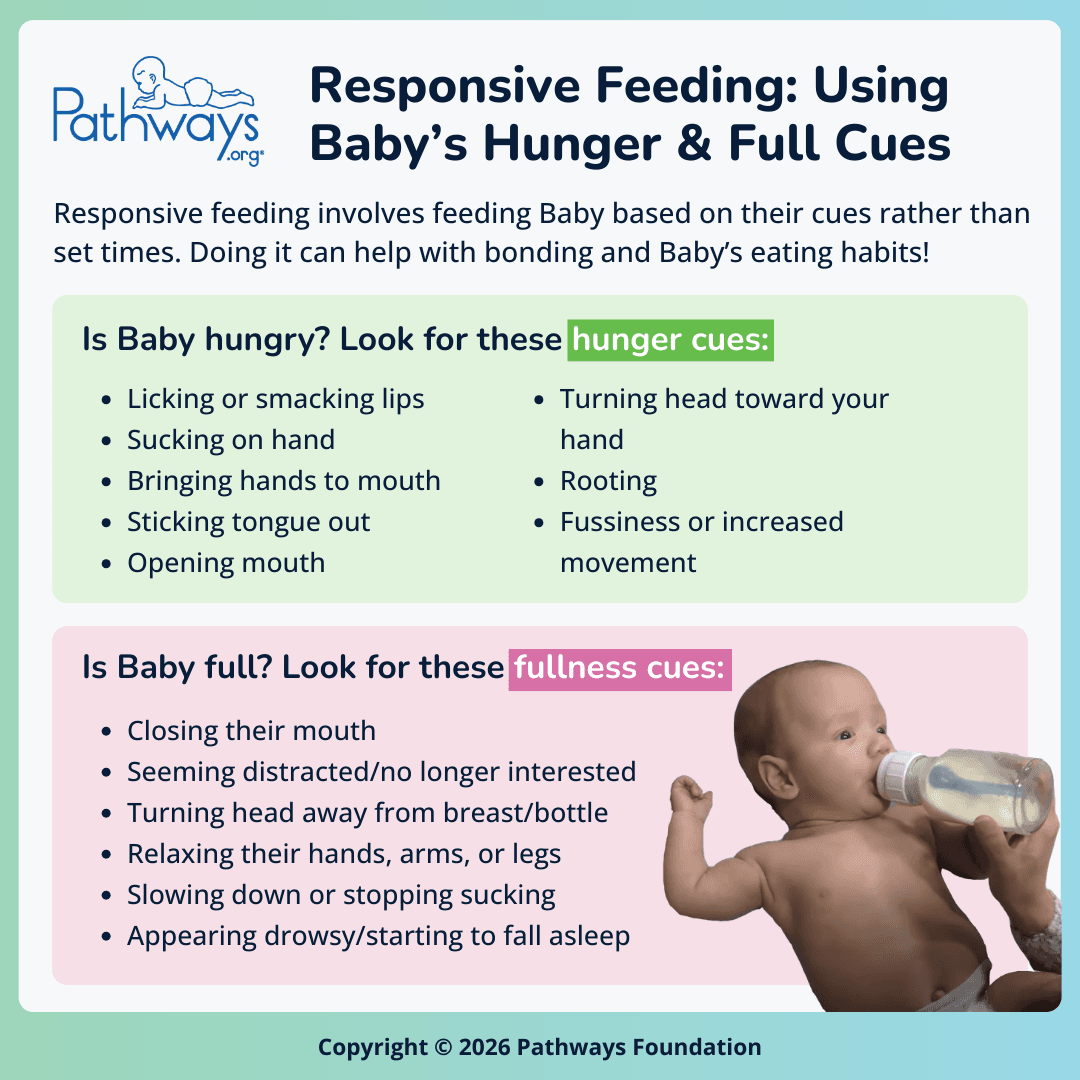
New parents often wonder how much their Baby should eat and when. The honest answer: it depends on your baby's individual needs and cues. Pediatricians recommend responsive feeding, which is feeding based on hunger and fullness cues rather than a strict schedule. It also means responding promptly, or before Baby starts crying, which is actually a late sign of hunger. As you spend more time with Baby, you'll get better at reading their cues.
Baby has a lot of growing to do and will be very hungry as a newborn. But because their stomach starts out incredibly small (about the size of a cherry at birth!) they eat several small portions spread throughout the day and night. The amount and frequency change naturally as their stomach grows and their diet expands.
How to Know if Baby is Eating Enough
If Baby drinks formula, a helpful rule of thumb is about 2.5 oz of formula per day for every pound of body weight. If you breastfeed, watch for these signs from the American Academy of Pediatrics:
Baby loses no more than 8–10% of birth weight in the first few days
By days 5–7, Baby has 6 or more wet diapers per day with pale or nearly colorless urine
Stools follow a typical progression: dark and tarry in the first 2 days, greenish by days 3–4, yellow and loose by days 5–7
Baby seems satisfied and calm between feedings, and is nursing at least 8–12 times in 24 hours
Baby's healthcare provider will check their weight and ask about diapers and feedings at every well-baby visit. Keeping a simple log of feeding sessions and diaper changes can make those conversations more productive.
When to Get Support with Feeding
Some signs that your child may be having difficulty with feeding include:
During feedings:
Cannot latch on to breast or bottle
Sucks in light, quick, fluttery motions rather than deep, regular sucks
Stiff body or arching of back during a feeding
Unusually short or long feedings
Coughing and/or choking while eating or drinking
After feedings:
Frequent spitting up and/or vomiting after feeding
Appears hungry shortly after a feeding
Has diarrhea or rash after feeding
Not following their own growth curve
Frequent respiratory illnesses
With solids and textures:
Consistently rejects solid foods
Is unable to keep food or liquid in mouth
Difficulty chewing age-appropriate food
Does not enjoy a variety of foods, or refuses certain textures
Gagging
If you notice any of these signs, trust your instincts and talk to your child's healthcare provider. Many feeding challenges are very treatable, especially when caught early.
Who can help:
Lactation consultants support breastfeeding difficulties with latch, milk supply, positioning, and nursing comfort.
Speech-language pathologists (SLPs) evaluate and treat sucking, swallowing, and chewing difficulties.
Occupational therapists (OTs) address the sensory, motor, and behavioral aspects of eating, including texture aversions and self-feeding skills. A specialist may recommend feeding techniques, exercises, and foods tailored to your child's needs.
EXPLORE FEEDING BASICS