Baby's Senses: Vestibular (Balance)
The vestibular sense is also known as the "balance sense". You might not think of balance as a sense, but it absolutely is! And it starts in a surprising place: the inner ear. This is where small sensory organs are constantly communicating with the brain to help us understand where our body is in space and how to stay upright with every movement we make. It's what keeps us balanced while we walk, run, sit, and stand, and it helps us move smoothly without feeling dizzy or disoriented.
Baby's vestibular sense begins developing in the womb, where every movement and shift in position gives the inner ear its first workout. After birth, it develops quickly: from lifting and holding up their head in the early months, to sitting without toppling over, to eventually finding their balance for those first exciting steps. Rocking, swinging, and being carried in different positions all help build this sense, which is one reason babies love being in motion.
⚑ How the Vestibular Sense Develops
You'll see Baby improve their balance with every new stage of movement! Watch for these signs of vestibular development in Baby's first year:
2 Months
Enjoys a variety of movements, like being rocked or gently swung, showing that the vestibular sense is already responding to motion
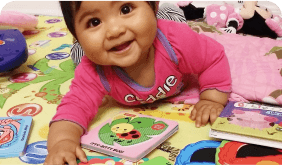
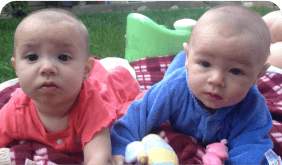
Lifts and holds their head up while lying on their tummy, one of the first signs of neck strength and stability the vestibular sense helps build
4 Months
Begins to rock and move their legs and arms while on their tummy, building the early strength and coordination that balance depends on
Keeps their head centered while watching faces or toys
6 Months
Keeps their head upright when held in supported positions like sitting or standing, showing growing stability and body control
Rolls from back to tummy and tummy to back, using their developing sense of balance to move smoothly through the motion
9 Months
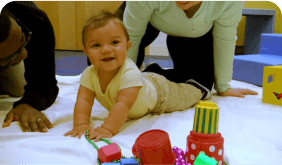
Sits without support, maintaining balance even while reaching for toys
Observes the environment from a variety of positions—lying down, sitting, crawling, and standing with assistance
12 Months
Moves in and out of various positions, showing growing balance and body control
Pulls to stand and cruises along furniture, relying on an increasingly steady sense of balance
Is able to sit unsupported and turn their head to look at objects without losing balance
Helping the Vestibular Sense Develop
Try these expert-designed activities to help develop Baby's vestibular sense!
When to Get Support with the Vestibular Sense
If you notice ongoing challenges, like strong distress with everyday movement, or persistent wobbliness beyond what's typical for Baby's age, write down what you see and share it with Baby's healthcare provider.
KEEP EXPLORING